
Industrial Laundry Equipment for Florida Facilities
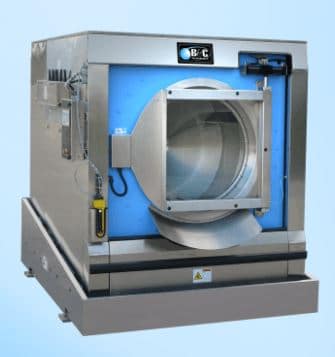
Industrial laundry equipment supports businesses that process substantial volumes of linens, uniforms, towels, garments, and other textiles. These facilities depend on machinery that can handle their daily workloads while keeping washing, drying, finishing, and linen handling coordinated.
Gulf Coast Equipment Sales provides commercial and industrial laundry equipment for businesses throughout Florida. Based in Lakeland, the company offers B&C Technologies washers, dryers, flatwork ironers, and related laundry machinery, along with equipment sales, parts, and service support.
Industrial laundry operations have different equipment requirements depending on the textiles being processed, production schedules, facility layout, and available utilities. A hotel processing guest linens has different needs from a commercial linen service handling textiles for multiple customers.
Choosing suitable machinery requires understanding how the equipment will function within the entire operation.
For Florida businesses establishing, expanding, or updating their laundry facilities, Gulf Coast Equipment Sales offers equipment options suited to a range of commercial and industrial applications.
B&C Technologies Industrial Laundry Equipment
B&C Technologies manufactures machinery for commercial and industrial laundry applications. Gulf Coast Equipment Sales offers several B&C equipment categories for Florida businesses, including industrial washers, dryers, and linen-finishing equipment.
Industrial Washers and Washer-Extractors
Industrial washers perform the cleaning and extraction stages of laundry production.
Gulf Coast Equipment Sales lists B&C Technologies SI, SA, and SB industrial washer series, along with additional commercial washer options.
These equipment families provide choices for facilities with varying production requirements and textile-processing needs.
When evaluating a washer, operators should consider the type of textiles being processed, expected load characteristics, wash requirements, available utilities, and the equipment receiving the textiles afterward.
Extraction performance is another consideration because the moisture remaining in textiles influences the subsequent drying process.
Equipment selection should be based on the specific machine’s documented capabilities rather than assuming that every industrial washer has the same operating characteristics.
Industrial Dryers
Drying equipment receives textiles after washing and extraction.
Gulf Coast Equipment Sales lists B&C Technologies DP and DI industrial dryer series, along with commercial dryers and specialized drying cabinets.
The appropriate dryer depends on the textiles being handled, incoming moisture conditions, available utilities, ventilation requirements, and production schedule.
Facilities processing different fabric types may require different drying arrangements. Certain specialty materials may not be suitable for conventional tumble drying and should be processed according to their care requirements.
Dryer selection should account for the machines used before and after drying rather than focusing exclusively on the dryer’s stated load capacity.
Businesses comparing washer and dryer options can explore commercial washers and dryers for Florida laundry facilities.
For B&C equipment families and specific product information, visit Gulf Coast Equipment Sales’ B&C Technologies industrial and commercial laundry equipment page.
Flatwork Ironers, Feeders, and Linen-Processing Equipment
Washing and drying are only part of the process for businesses that handle large quantities of flat linens.
Facilities processing sheets, pillowcases, table linens, and other suitable textiles may need equipment dedicated to finishing and folding.
Flatwork ironers use heated surfaces or rollers to finish appropriate flat textiles. Depending on the equipment configuration, separate or integrated machinery may assist with feeding and folding.
Gulf Coast Equipment Sales lists several B&C Technologies ironer and finishing-equipment families, including:
- IC Series Commercial Ironer
- IR Series Commercial Ironer
- IM Series Industrial Ironer
- IQ Series Commercial Feeder-Ironer-Primary Folder
- IF Series Commercial Feeder-Ironer-Folder
These equipment categories serve different finishing requirements.
Selecting Finishing Equipment for the Application
The textiles being processed should guide finishing-equipment selection.
An operation focused on sheets and table linens may have different requirements from a business handling uniforms, towels, and specialty garments.
Operators should consider linen dimensions, fabric characteristics, available floor space, feeding arrangements, and employee access.
The level of automated handling also matters. Some operations use separate finishing stations, while others may benefit from equipment that combines multiple processing functions.
The appropriate configuration depends on the actual workload and the specifications of the available machinery.
Not all textiles require flatwork ironing. Certain items may follow different drying, pressing, folding, or handling processes.
Where garment pressing is part of the operation, Gulf Coast Equipment Sales also offers laundry presses for suitable applications.
Matching Industrial Laundry Equipment to Facility Requirements
Industrial laundry equipment should be compatible with the facility where it will operate.
A machine may satisfy production requirements but still be unsuitable if the building cannot accommodate its utility connections, operating clearances, or material-handling needs.
Production Requirements and Equipment Compatibility
Operators should establish what types of textiles the facility processes, how production changes throughout the workday, and which stages require specialized machinery.
The relationship between equipment categories is important.
Washed textiles must move to suitable drying equipment. Dried goods may then require ironing, folding, sorting, or other finishing processes.
A machine should therefore be evaluated in relation to the equipment that supplies work to it and the equipment that receives its output.
This does not mean every facility requires a fully integrated system. Independent machines can serve many operations, provided their capacities, operating requirements, and handling arrangements are compatible.
Floor Space and Utilities
Industrial laundry installations may require consideration of water supply, drainage, electrical connections, fuel, ventilation, exhaust arrangements, and floor loading.
Individual equipment models have different requirements.
Operators should review applicable manufacturer documentation and actual building conditions before making final equipment decisions.
Adequate working space is also necessary for loading, unloading, material movement, routine inspections, and maintenance access.
Facilities should account for carts, sorting areas, temporary textile storage, and safe movement between operating departments.
These considerations are particularly relevant when new equipment must fit within an existing building.
Industrial Laundry Equipment for Different Business Applications
Industrial laundry machinery serves multiple commercial sectors, but processing requirements vary considerably between them.
Hotels and Hospitality Facilities
Hotels, resorts, and hospitality businesses frequently process guest linens, towels, bedding, and other reusable textiles.
Laundry equipment should correspond to the property’s operating schedule, textile inventory, available space, and finishing requirements.
Some properties operate on-premise laundries, while others rely on commercial linen providers.
These operating models have different equipment needs.
Commercial Linen Processing
Linen-processing businesses may handle textiles for hotels, restaurants, healthcare organizations, and other commercial customers.
Their equipment requirements depend on the services provided, textile categories, customer schedules, and production arrangements.
Flatwork ironing and folding equipment may be particularly relevant when significant portions of production involve sheets or table linens.
Healthcare and Assisted Living
Healthcare and assisted-living facilities may process bedding, towels, uniforms, personal garments, and other reusable textiles.
Machinery must be appropriate for the facility’s textile-handling procedures and applicable infection-control requirements.
Equipment selection should reflect the organization’s processing policies rather than assuming that a particular washer or dryer automatically satisfies every healthcare requirement.
Uniform and Specialty Textile Processing
Businesses processing uniforms, workwear, and specialty textiles may need machinery capable of accommodating different fabric characteristics and care instructions.
Some applications also involve garments that require specialized washing, drying, or finishing methods.
Operations combining commercial laundry and dry-cleaning services may maintain separate equipment for different textile-care processes.
Gulf Coast Equipment Sales continues to support established dry-cleaning equipment and machine applications alongside its commercial laundry equipment offerings.
Supporting Equipment, Maintenance, and Production Reliability
Industrial laundry machinery depends on more than the machines directly handling textiles.
Utilities, supporting systems, maintenance practices, and access to appropriate parts all affect the practical operation of a facility.
Steam and Supporting Equipment
Some industrial laundry facilities use steam for ironing, pressing, hot-water production, or other processes requiring controlled heat.
Gulf Coast Equipment Sales offers Fulton steam equipment, including commercial laundry boilers and related components.
Facilities that rely on steam should consider the requirements of their connected equipment alongside the boiler and supporting infrastructure.
Feedwater equipment, condensate return systems, blowdown arrangements, water treatment, controls, and piping may be relevant depending on the installation.
The equipment configuration should be established from actual steam requirements, manufacturer specifications, and facility conditions.
For additional information, explore commercial laundry boilers and steam systems.
Maintenance and Service Considerations
Routine maintenance is an important part of operating industrial laundry machinery.
Equipment condition, component wear, cleaning requirements, operating records, and changing production demands can influence maintenance planning.
Facilities should follow applicable manufacturer instructions and ensure that appropriate personnel perform inspection and service activities.
Access to equipment components should also be considered when planning machinery placement.
A maintenance program cannot eliminate every equipment failure, but regular attention to equipment condition can help identify problems before they develop into more disruptive operating issues.
Gulf Coast Equipment Sales provides equipment parts and service support for commercial and industrial laundry customers.
Specific equipment, parts, and service requirements can be discussed directly with the company.
Request Industrial Laundry Equipment Information in Florida
Businesses evaluating industrial laundry equipment should begin with a clear understanding of the products they process and the operating conditions their machinery must support.
Useful information includes existing equipment, textile types, daily workloads, production schedules, utility availability, floor space, and anticipated changes to the operation.
These details provide a starting point for discussing appropriate equipment categories and identifying what additional model-specific information may be needed.
Gulf Coast Equipment Sales offers B&C Technologies washers, dryers, flatwork ironers, and related laundry equipment for Florida commercial and industrial facilities.
With equipment sales, parts, and service support, the company provides a point of contact for businesses reviewing new machinery, replacement equipment, and existing equipment needs.
Planning a new industrial laundry operation or reviewing your current equipment?
Contact Gulf Coast Equipment Sales to discuss your facility’s equipment requirements and request information about available options.
FREQUENTLY ASKED QUESTIONS
What is industrial laundry equipment?
Industrial laundry equipment includes washers, dryers, flatwork ironers, folders, and related machinery used to process textiles in commercial and high-volume laundry operations. Equipment requirements depend on the textiles handled, production schedule, and facility conditions.
What is the difference between commercial and industrial laundry equipment?
The terms overlap. Industrial laundry equipment generally refers to machinery intended for demanding commercial production applications. Actual capabilities depend on the equipment model, operating requirements, and manufacturer specifications.
Does Gulf Coast Equipment Sales offer B&C Technologies equipment?
Yes. Gulf Coast Equipment Sales offers B&C Technologies industrial and commercial laundry equipment for Florida businesses, including washers, dryers, flatwork ironers, and linen-finishing equipment.
What equipment is needed for industrial linen processing?
Industrial linen processing may involve washer-extractors, dryers, flatwork ironers, feeders, folders, and material-handling equipment. The appropriate combination depends on textile types, processing requirements, and the facility’s operation.
Can industrial laundry equipment be replaced individually?
Individual machines can be replaced, provided the proposed equipment is suitable for the facility. Compatibility with existing machinery, utilities, installation space, and production requirements should be evaluated before replacement.
Does Gulf Coast Equipment Sales provide parts and service?
Yes. Gulf Coast Equipment Sales provides equipment parts and service support for commercial and industrial laundry customers. Contact the company to discuss specific equipment and service requirements.